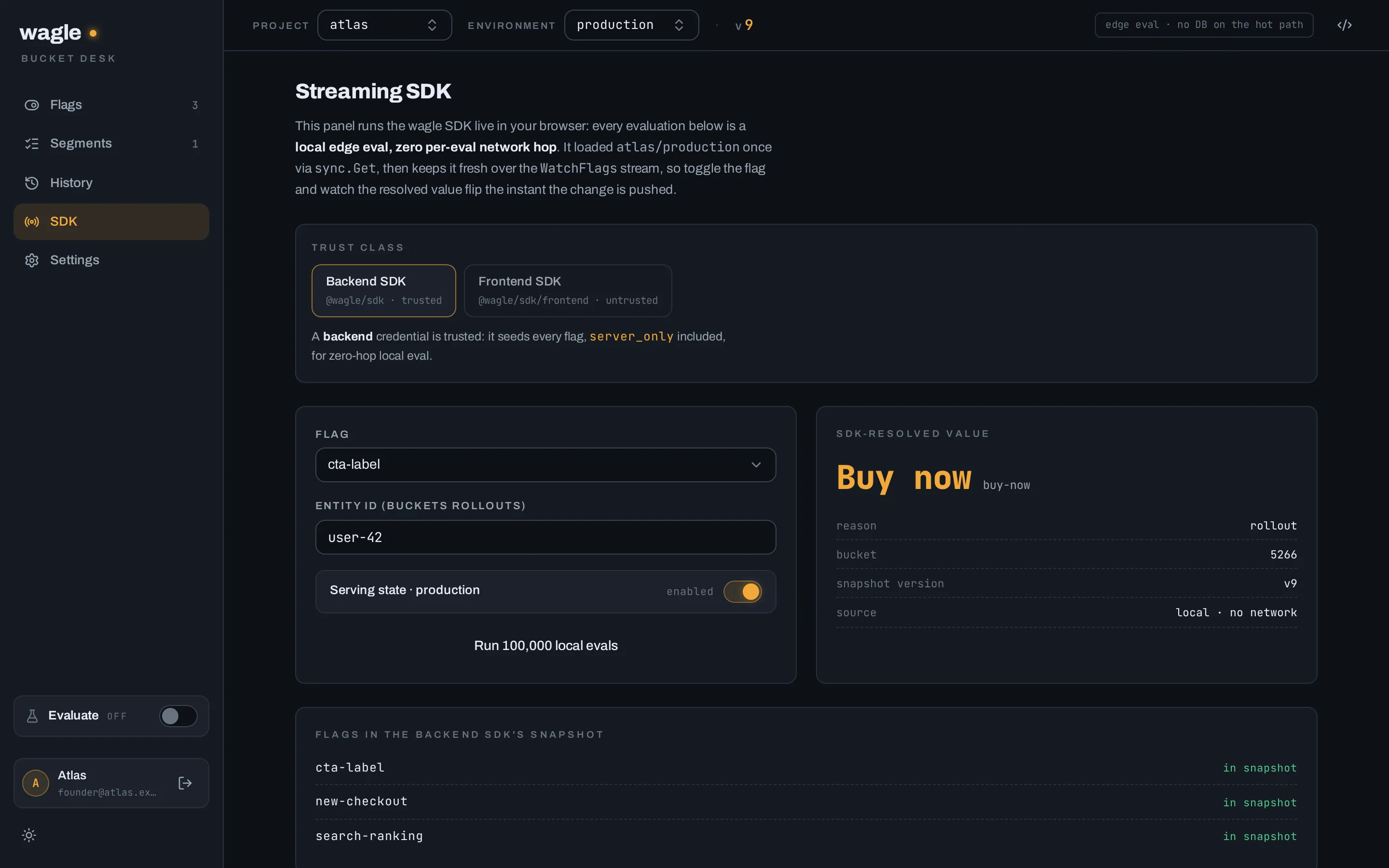
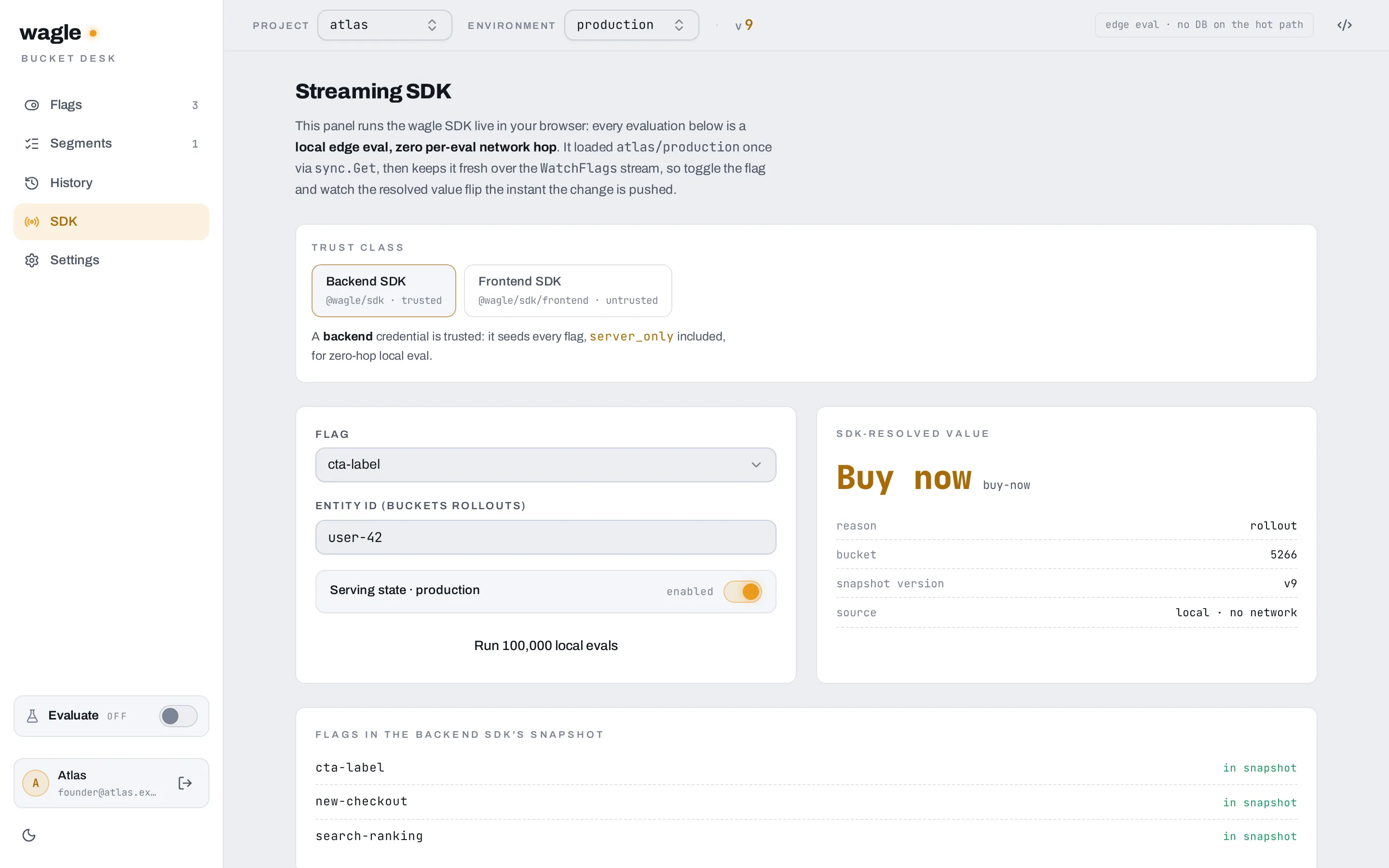
PricingA sync is the single call that ever reaches wagle: your SDK asking for its (project, environment) config. Every evaluation runs locally in your process and is free, always. Nothing else is metered: not flags, not environments, not projects, not seats. Signing up puts you on Free with 500,000 syncs a month and no card.
evals free · flags unlimited · seats unlimited · no overageEvery plan is a capped bucket and there is no overage on any of them: outgrow one and we move you to the plan that fits. Your config keeps being served either way. SDK counts below are always-on instances at the SDK’s own 30-second default poll, about 87,600 syncs each per month.
How many syncs will you run?
Two inputs, one estimate. No usage archaeology at month end.
syncs / month = instances × (2,628,000 ÷ interval)
syncs / month87,600
Cheapest planFree $0 / mo
Evaluations never count: they run inside your process and are free, always. Only the config pull reaches wagle, so the estimate above is your whole billable volume.
Your sizeFree
What every account starts on: room for five always-on SDKs at the default poll.
per month, no card
Start freeNot a trial and not a subscription: it's what an account without one gets. No card, ever.
- 500,000 SDK syncs / month
- about 5 always-on SDKs at the 30s default
- No overage: we move you to the plan that fits
- Unlimited local evaluations
- Unlimited flags & segments
- Unlimited projects & environments
- Full config history
- No support commitment: docs and self-serve
Most popularYour sizeStarter
Side projects and small apps: a couple of dozen always-on SDKs.
per month
Sign up & subscribeNo card at signup: subscribe when ready. Billed from day one, cancel anytime.
- 2,000,000 SDK syncs / month
- about 22 always-on SDKs at the 30s default
- No overage: we move you to the plan that fits
- Unlimited local evaluations
- Unlimited flags & segments
- Unlimited projects & environments
- Full config history
- Email support, best effort: no response-time promise
Your sizePro
A real production fleet: around ninety always-on SDKs across your services.
per month
Sign up & subscribeNo card at signup: subscribe when ready. Billed from day one, cancel anytime.
- 8,000,000 SDK syncs / month
- about 91 always-on SDKs at the 30s default
- No overage: we move you to the plan that fits
- Unlimited local evaluations
- Unlimited flags & segments
- Unlimited projects & environments
- Full config history
- Email support, best effort: no response-time promise
Your sizeTeam
Several services and hundreds of pods, polling as fast as you like.
per month
Sign up & subscribeNo card at signup: subscribe when ready. Billed from day one, cancel anytime.
- 30,000,000 SDK syncs / month
- about 342 always-on SDKs at the 30s default
- No overage: we move you to the plan that fits
- Unlimited local evaluations
- Unlimited flags & segments
- Unlimited projects & environments
- Full config history
- Priority support